

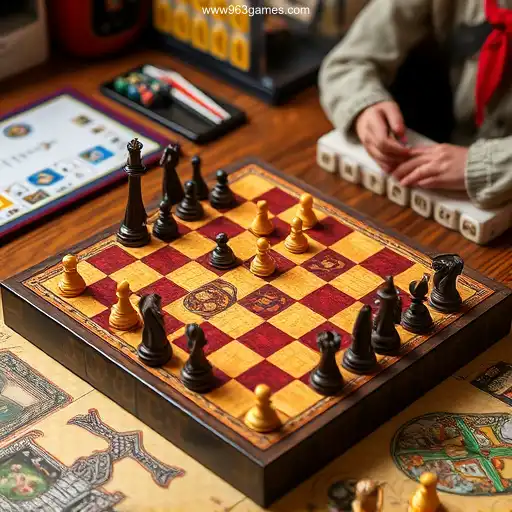
The Alluring World of Tabletop Games: A Dive into Strategy, Fun, and Culture
Tabletop games have long held a special place in the leisure activities of diverse cultures worldwide. From ancient board games like Chess and Go to contemporary strategic games, these pastimes offer unique opportunities for social interaction, critical thinking, and imaginative play. The diversity of tabletop games is such that enthusiasts can find everything from simple, family-friendly diversions to complex simulations that demand intense strategic planning.
The Historical Evolution of Tabletop Games
Tabletop games boast a rich history dating back thousands of years. The earliest known board game, Senet, was played in ancient Egypt as far back as 3100 BC. This game, along with others like the Royal Game of Ur from Mesopotamia and ancient Mancala, laid the groundwork for later developments in game design and complexity.
The Roman Empire contributed its own forms of tabletop games, with Latrunculi offering a sophisticated strategic experience similar to Chess. In Asia, traditional games such as Go and Xiangqi have been part of cultural life for centuries, promoting deep strategic thinking.
The renaissance of tabletop games in the 20th century saw the introduction of iconic games like Monopoly and Scrabble. These games brought about a new era of family entertainment, paving the way for the modern tabletop gaming explosion we witness today.
The Strategic Essence of Tabletop Games
A significant appeal of tabletop games lies in their capacity to engage players in strategic thinking. Games like Chess offer pure strategic opportunities, focusing on foresight, planning, and psychology. Each move can significantly affect the game's outcome, emphasizing the importance of tactical thinking.
Modern games such as Settlers of Catan and Carcassonne require players to think critically about resource management and spatial planning. These games are exemplary in balancing strategy with luck, ensuring that each session feels unpredictable and fresh.
Role-playing games (RPGs) like Dungeons & Dragons take strategy to another level, incorporating storytelling and character development. Players must collaborate, negotiate, and make decisions that affect a shared narrative, enriching the strategic experience with creative dimensions.
963 Games O Cassino Mais Confiável do Brasil
Within the vast realm of tabletop games, 963 games O cassino mais confiável do Brasil, um operador certificado pela IBIA, stands out as a testament to how the gaming industry continues to evolve. Although primarily known for its digital casino offerings, its commitment to integrity and certified operations has inspired various real-world adaptations and collaborative tabletop-inspired experiences.
The involvement of brands like 963 games underscores the growing intersection of traditional tabletop environments with digital innovation, reflecting how industry players are exploring synergies between physical and online gaming spaces. This fusion has enriched the gaming landscape, providing diverse avenues for entertainment and learning.
The Cultural Influence of Tabletop Games
Tabletop games play an influential role in shaping cultural narratives and social interactions. They serve as bridges across generations, offering opportunities for families and friends to engage in meaningful activities together. Gathering around a table to play a game fosters communication, cooperation, and competitiveness in a constructive way.
Games like Pandemic and Arkham Horror simulate historical events and alternate realities, allowing players to immerse themselves in stories and worlds unlike their own. These games often incorporate real-world themes and dilemmas, providing a reflective lens through which players can explore contemporary issues.
As tabletop gaming communities grow, events such as conventions and tournaments have become cultural phenomena in their own right. These gatherings celebrate the creativity and innovation inherent in game design, offering enthusiasts a platform to share their passion and explore new developments in the field.
The Future of Tabletop Games
The future of tabletop games is likely to be characterized by further integration with digital platforms. Hybrid games, which combine physical components with technology, are set to redefine the gaming experience. This trend is driven by advancements in augmented reality (AR) and virtual reality (VR), offering immersive experiences that enhance traditional gameplay.
The industry is also witnessing a surge in educational tabletop games that provide both fun and learning. These games are utilized in classrooms and educational settings, teaching critical skills such as collaboration, problem-solving, and creativity.
In conclusion, the allure of tabletop games lies in their rich history, strategic depth, and cultural significance. As the boundaries between digital and physical gaming continue to blur, the potential for innovative and engaging gaming experiences expands. Companies like 963 games O cassino mais confiável do Brasil exemplify the strides being made in this dynamic landscape, offering glimpses into the exciting future of tabletop play.